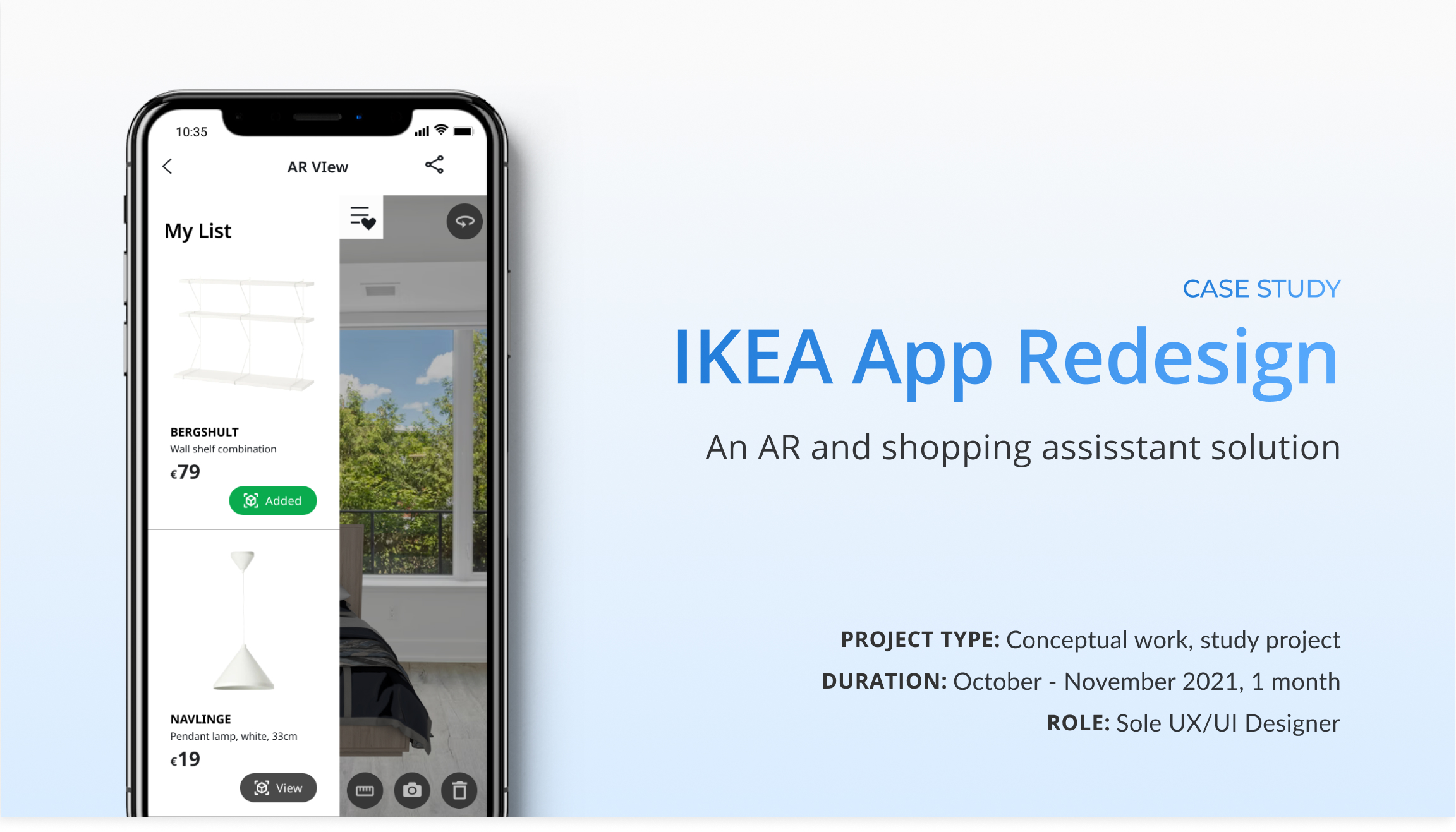
This project is part of a UX challenge brief by Ideate Labs I seeked out to better my skills as a designer. The task is to redesign the IKEA mobile apps, including IKEA - an ecommerce app, and IKEA Place - an AR app.
As countries go into lockdown due to the COVID-19 pandemic, IKEA has to rely more on online sales as it surged 60% in 2020. As a result, the mobile app’s experience needs to be improved for more:
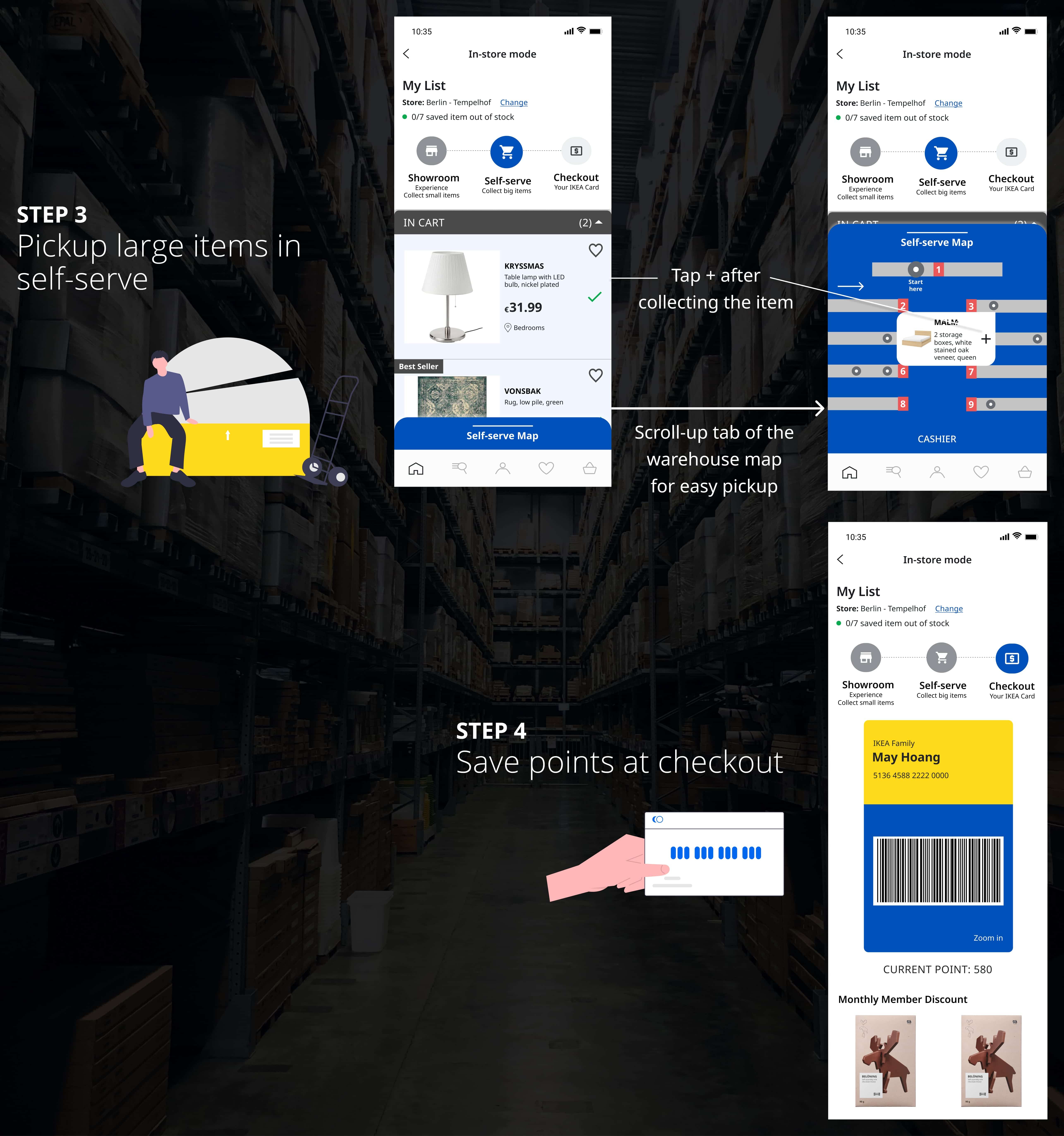
IKEA low cost model is sustained by depending on customer self-service. The app with in-store assisstance features will:
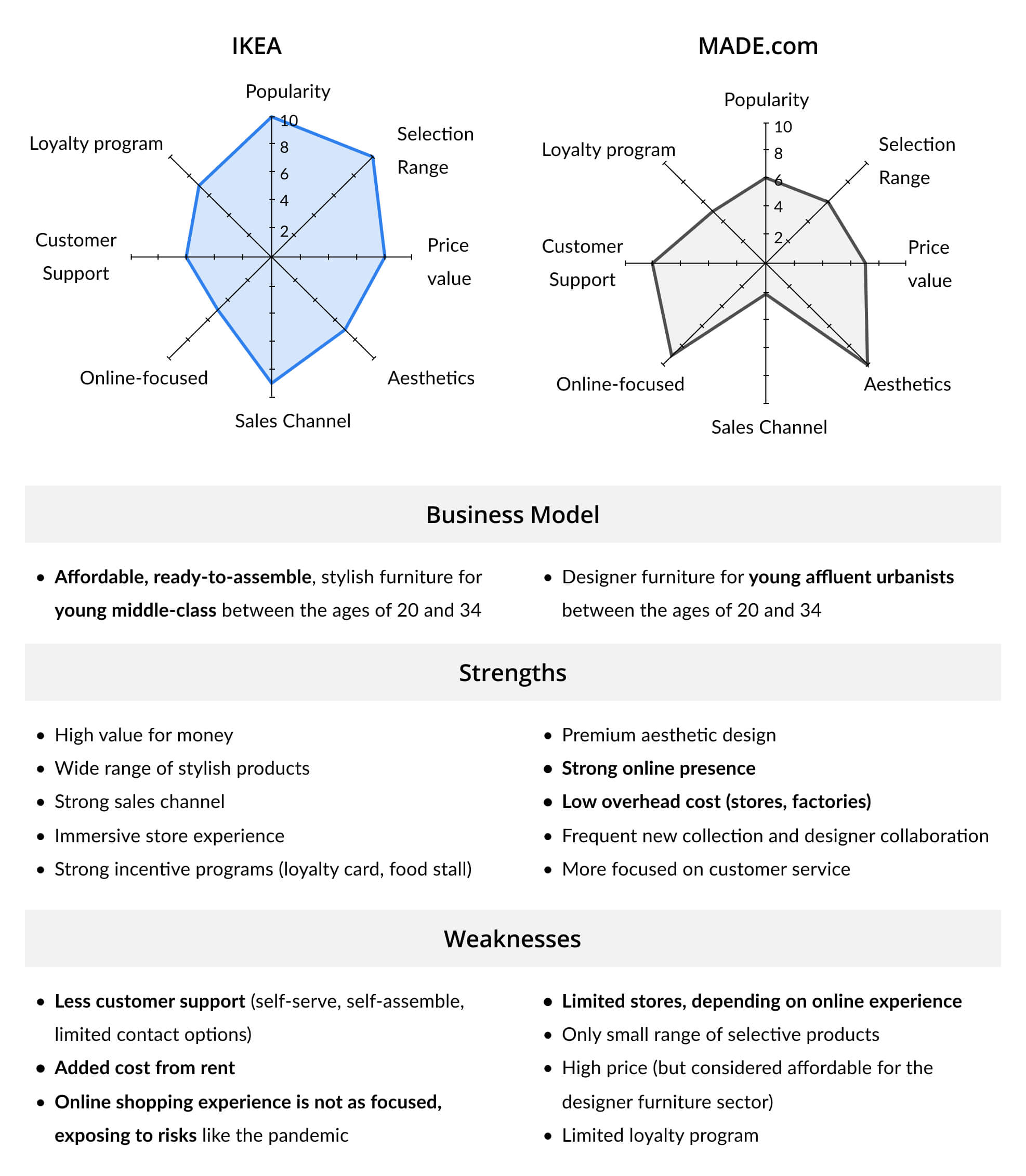
Since IKEA is a brick-and-mortal-native retailer, I did a competitve analysis on an online-native retailer MADE.com that focuses heavily on the mobile app and AR experience.
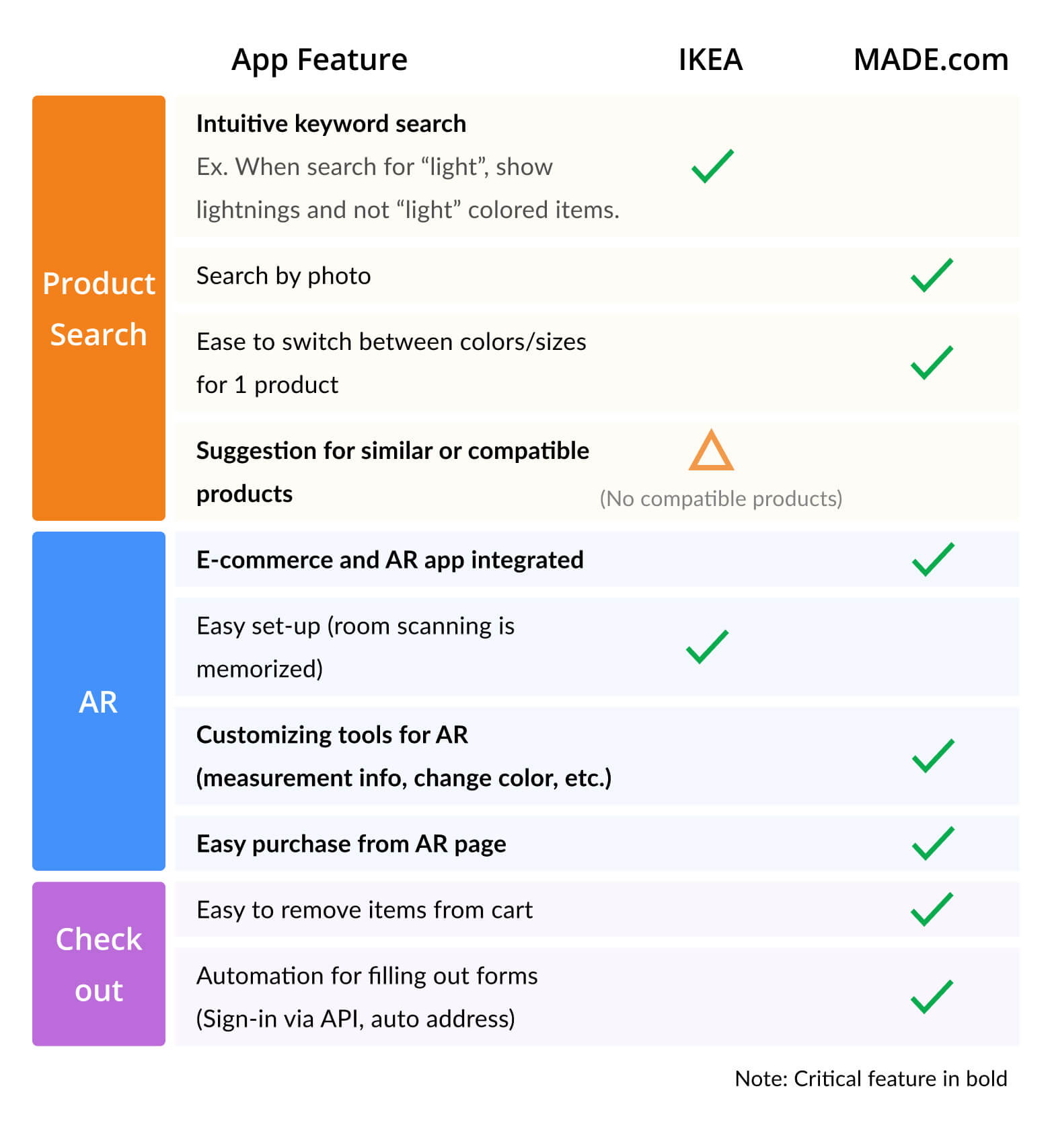
I compared the IKEA app against the competitor’s based on the 3 key stages of an e-commerce platform :
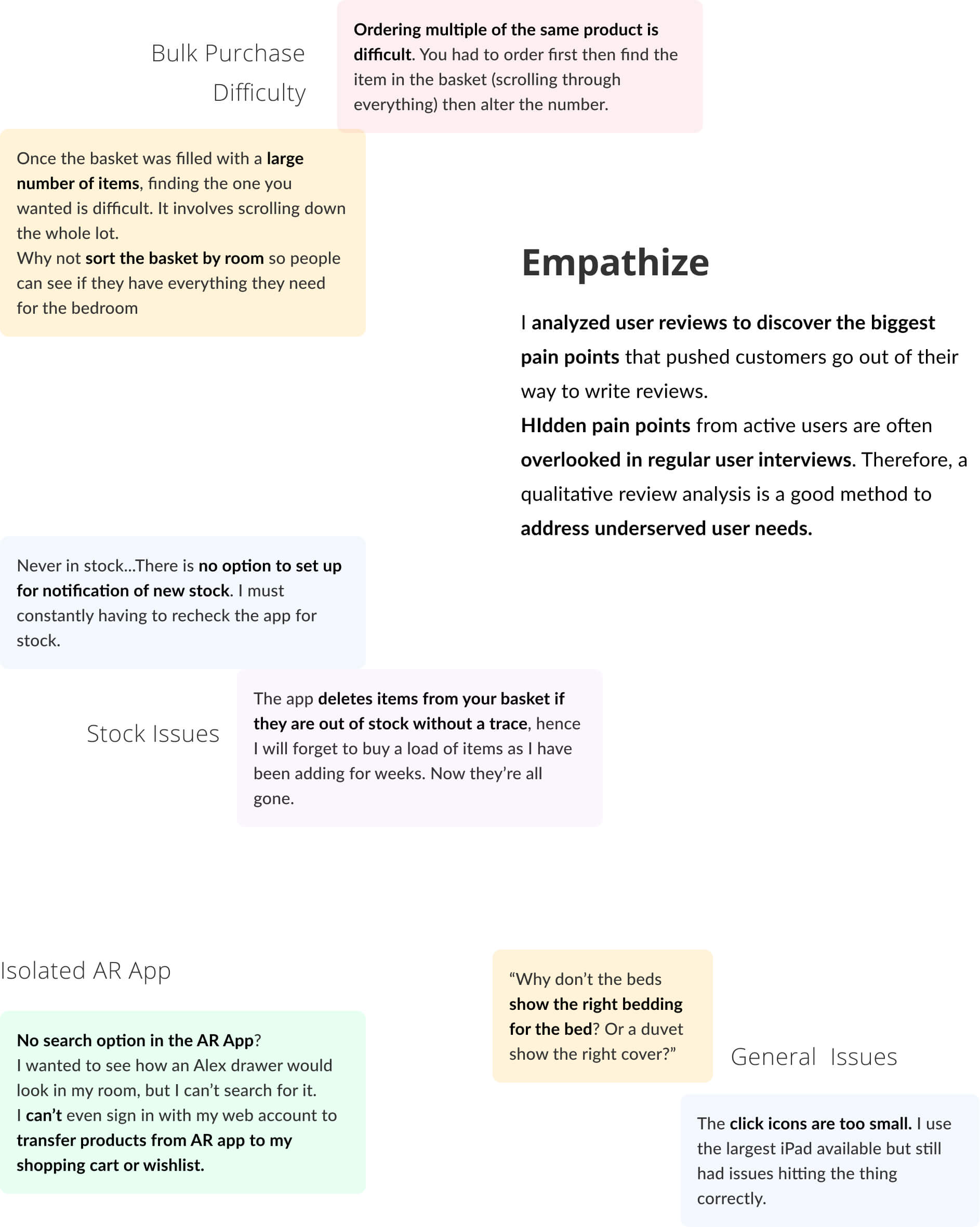
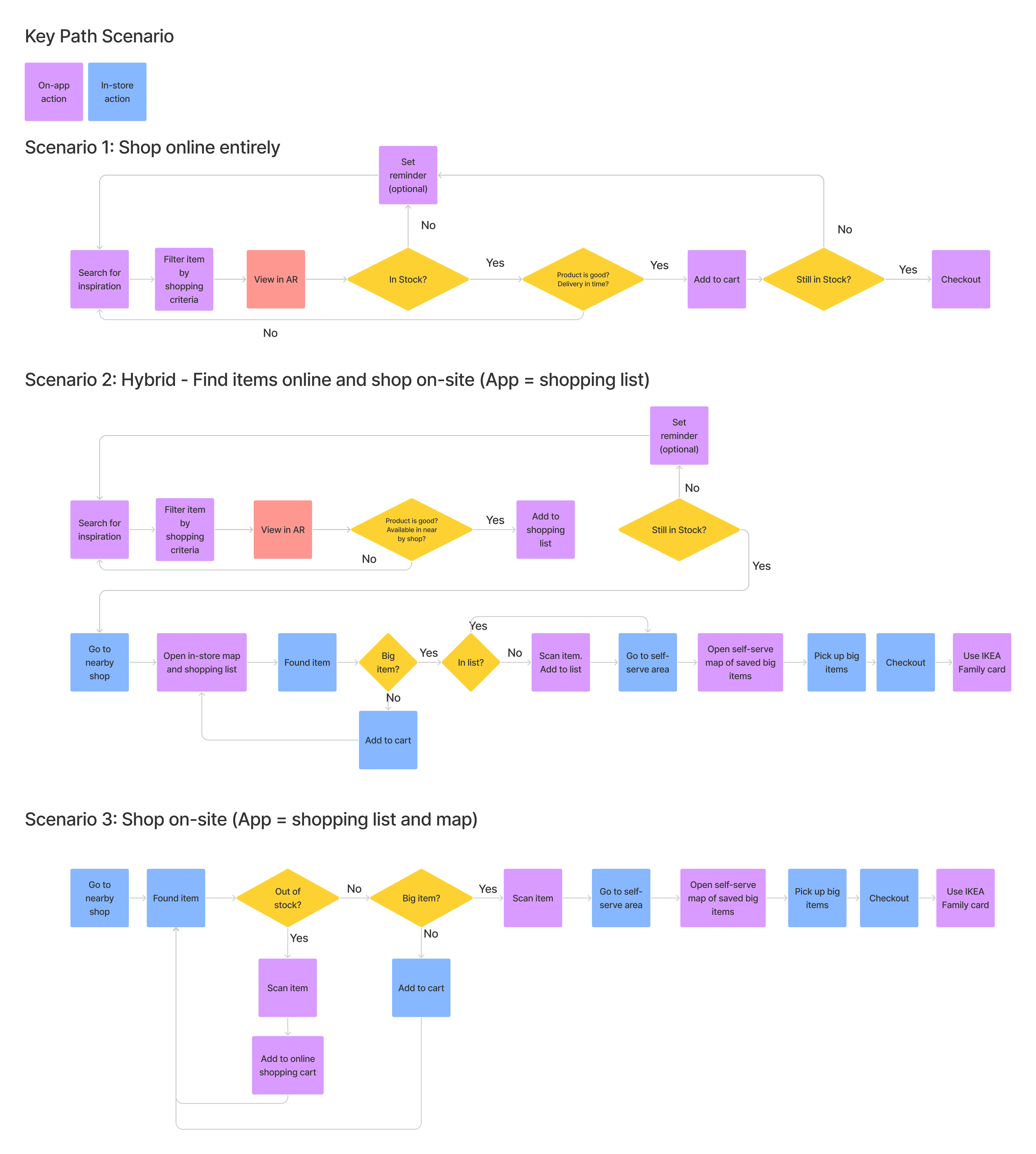
Method of shopping is a good indicator of the user’s priority (speed over physical experience, assurance), and their pain points linking directly to the specific marketplace (i.e. delivery issues for online, self-serve difficulty for in-store shopping)
Profiles for 3 key target customers are based on their main shopping method:
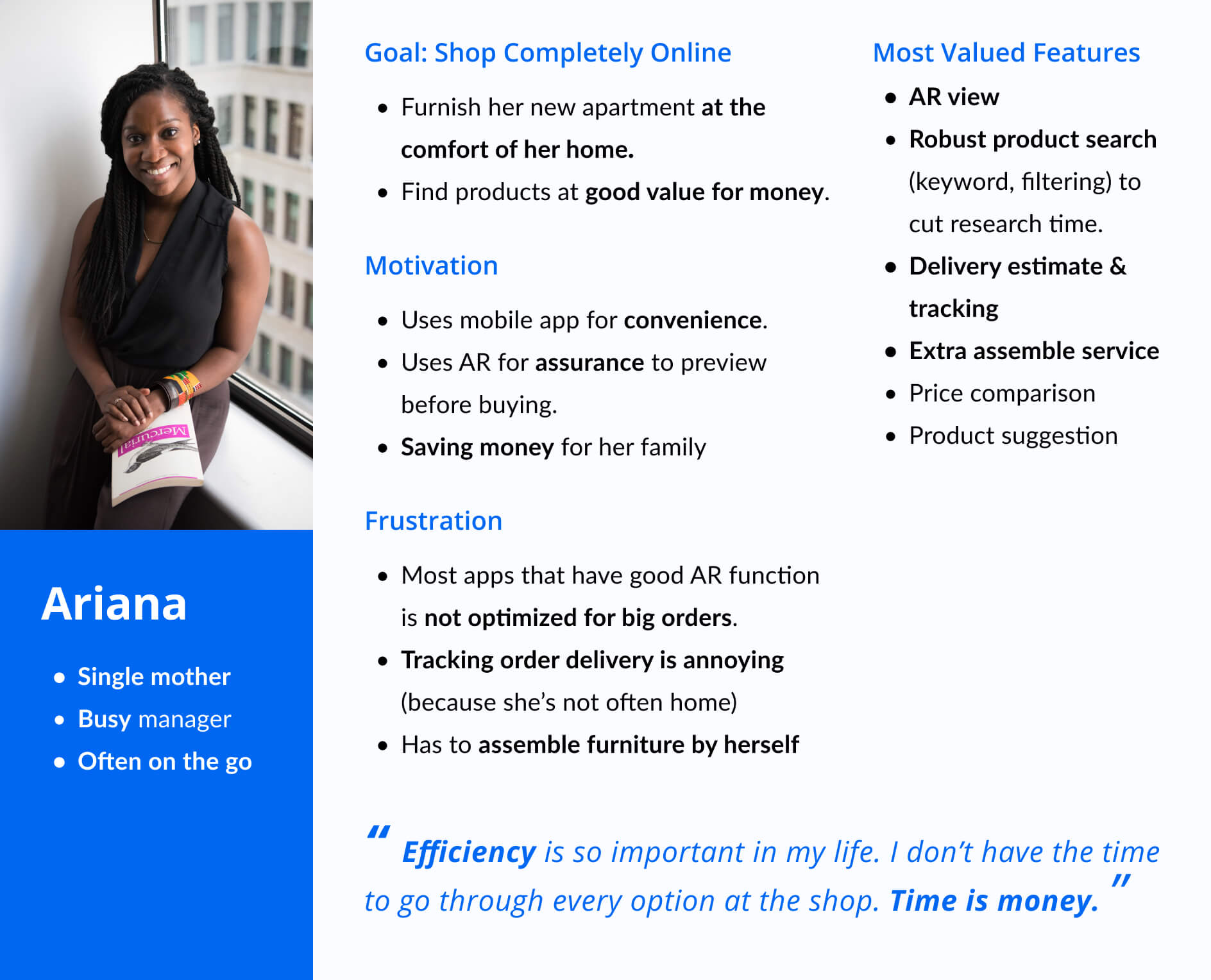
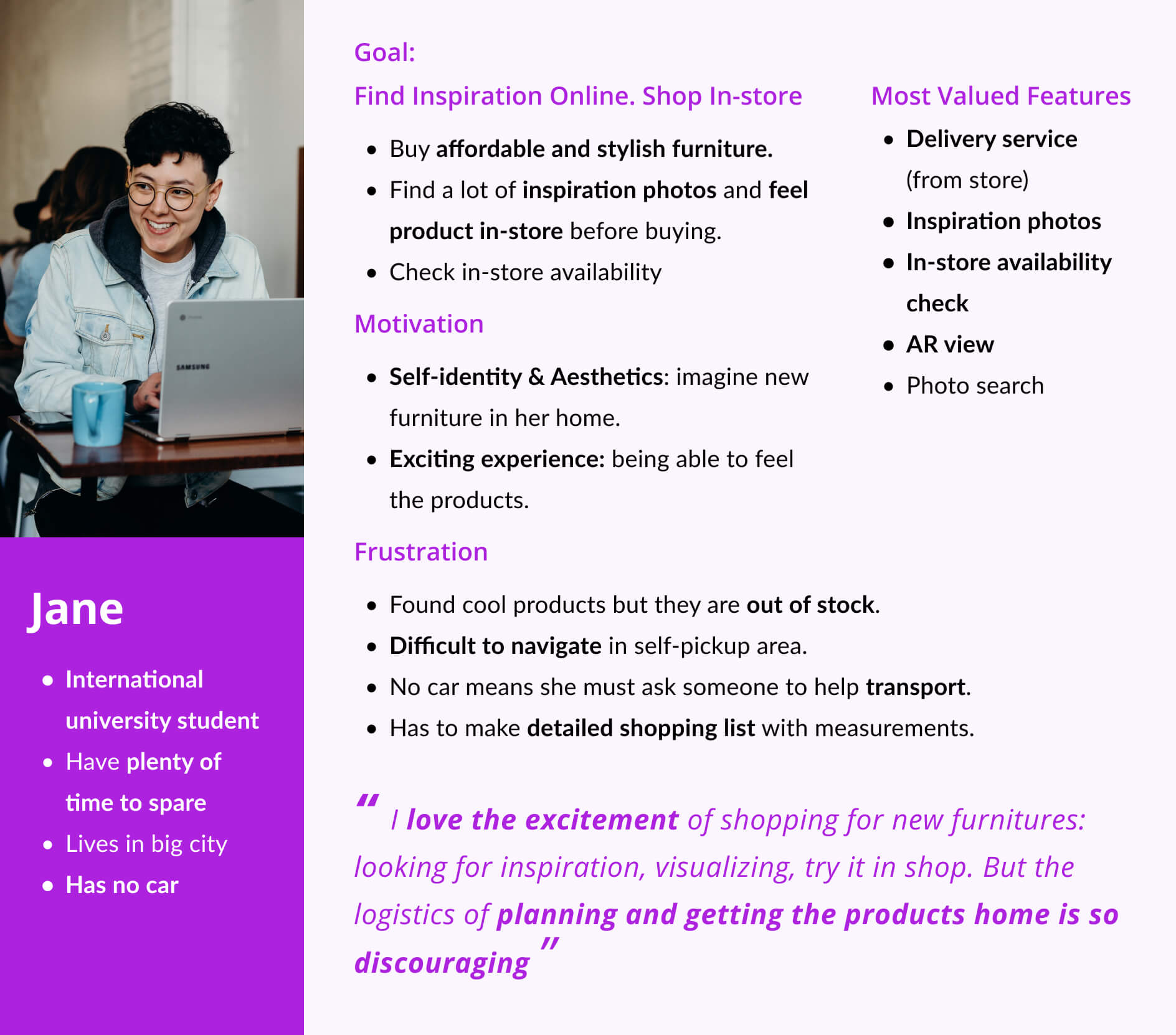
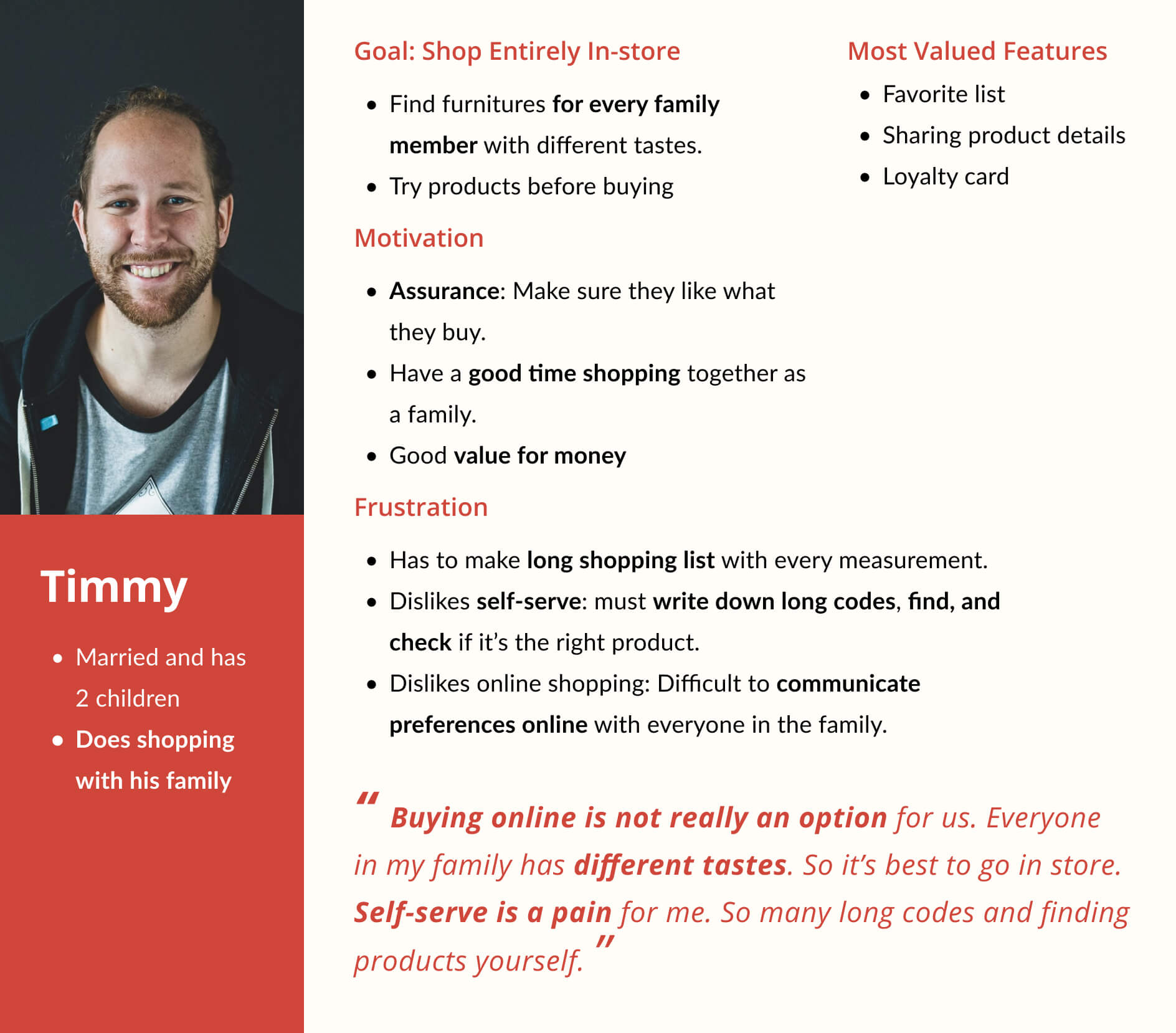
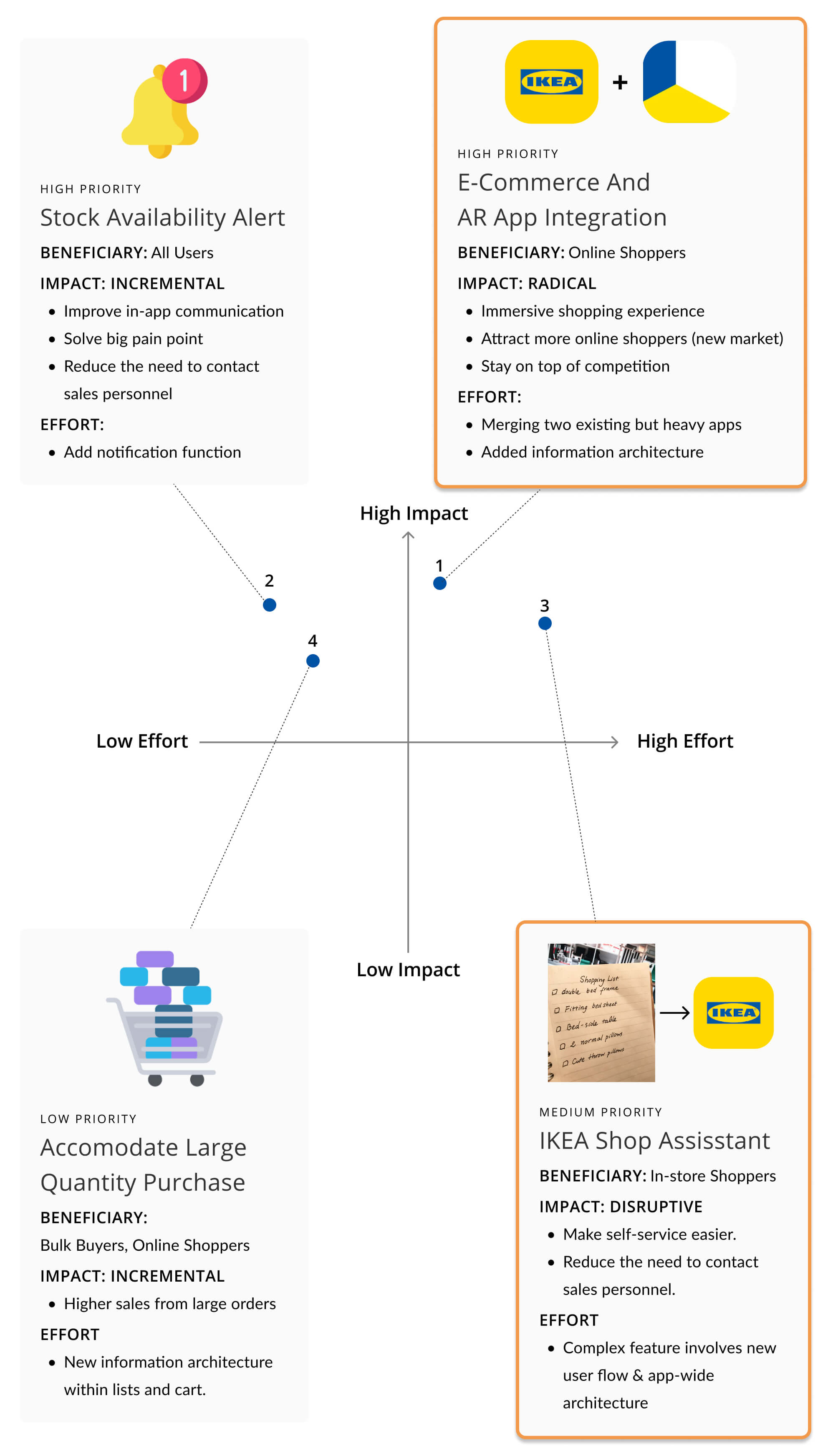
I defined different areas of improvement according to the user feedbacks and in-store observation. I then evaluated the priority of each project through 2 frameworks:
The incremental improvements (stock alert, accomodate large quantity order) have the highest return because they solve the biggest current pain points.
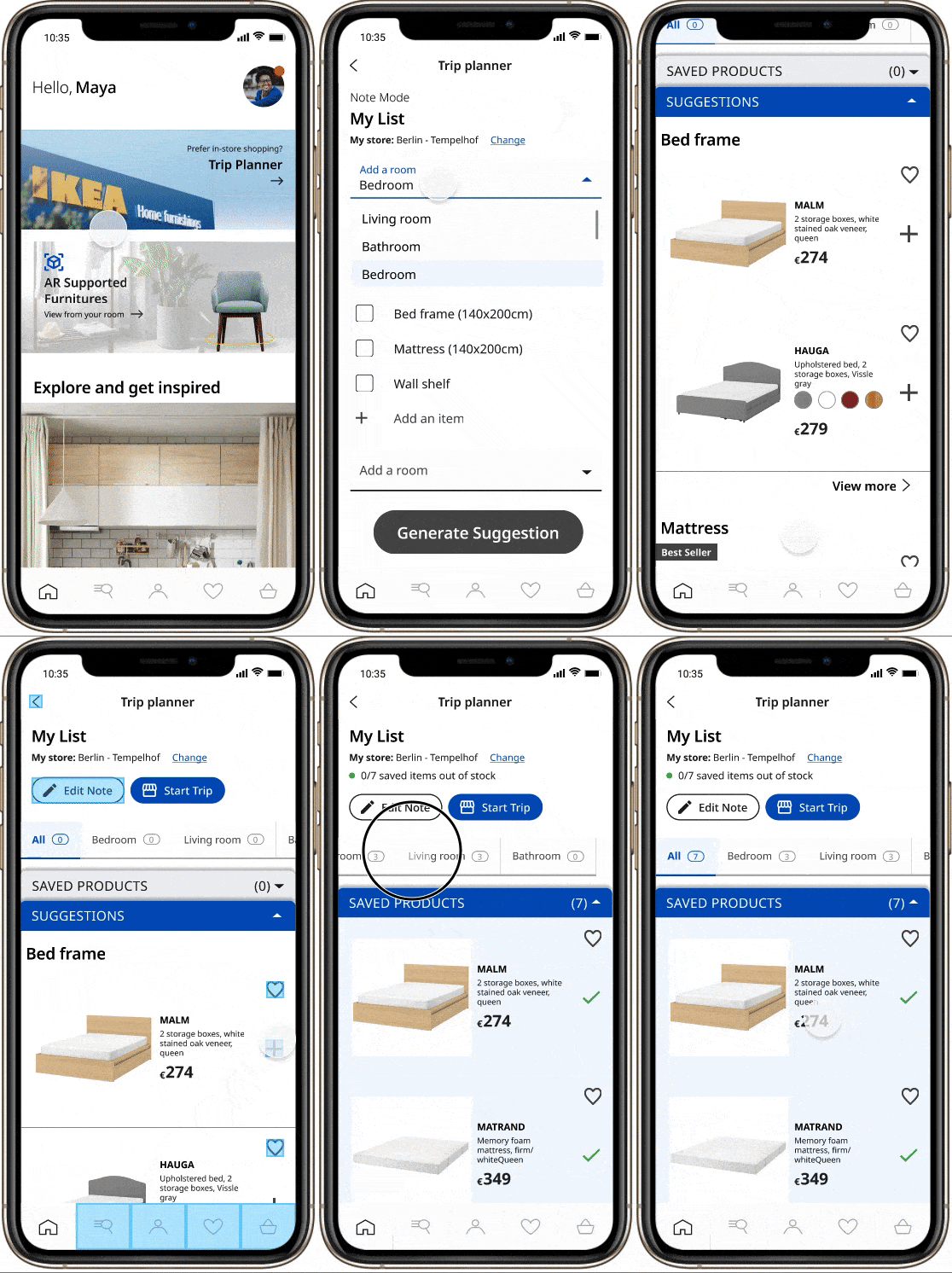
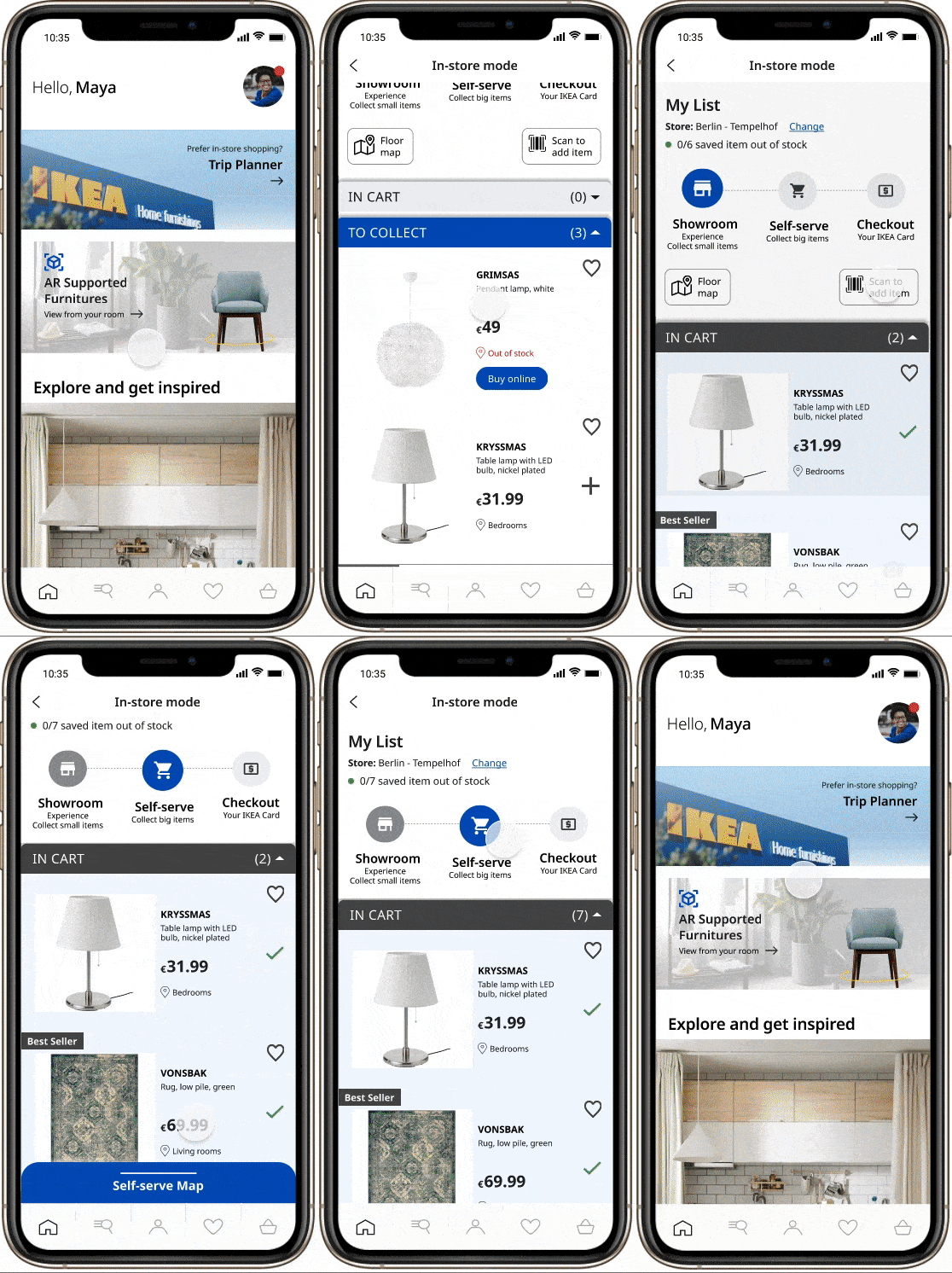
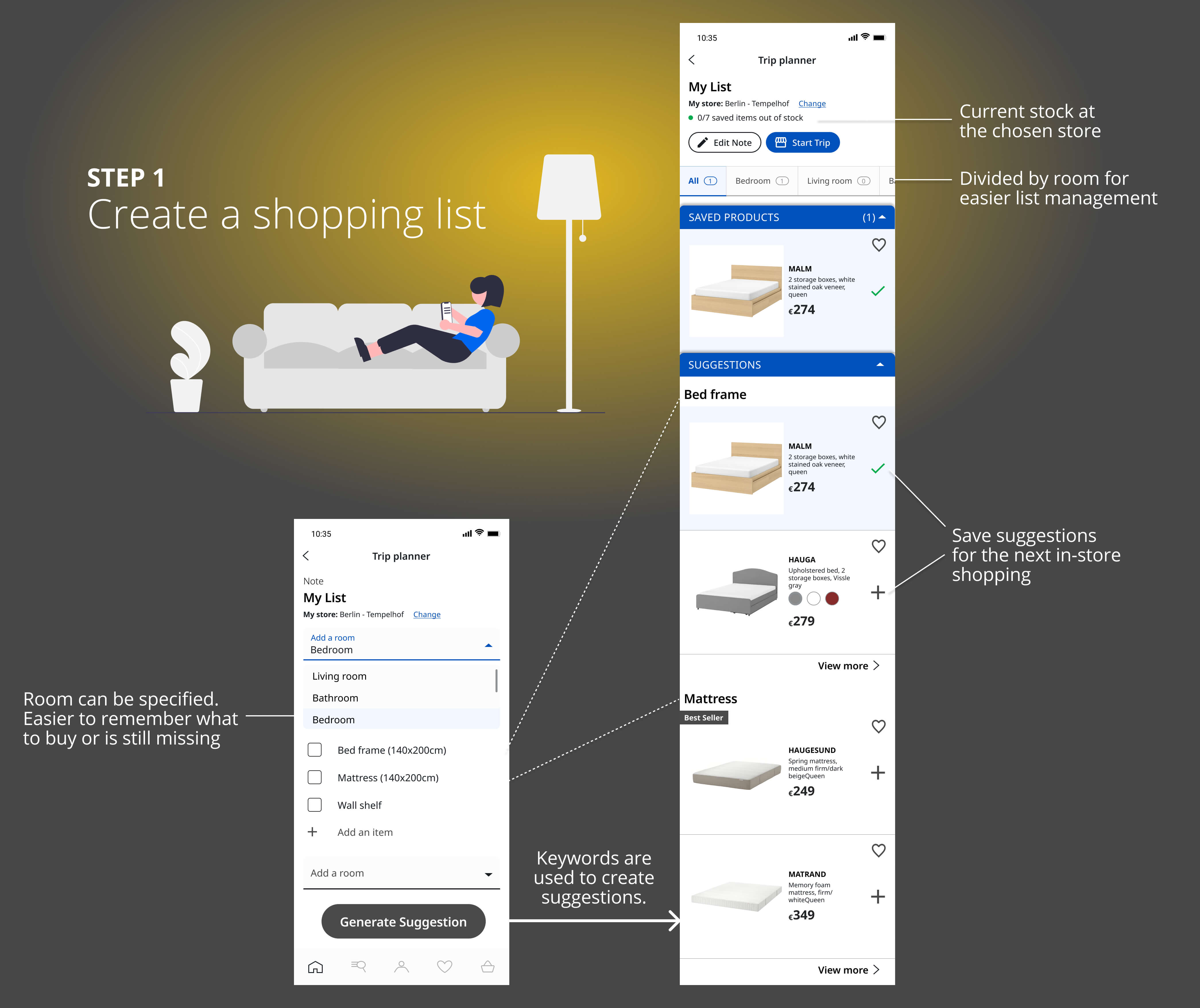
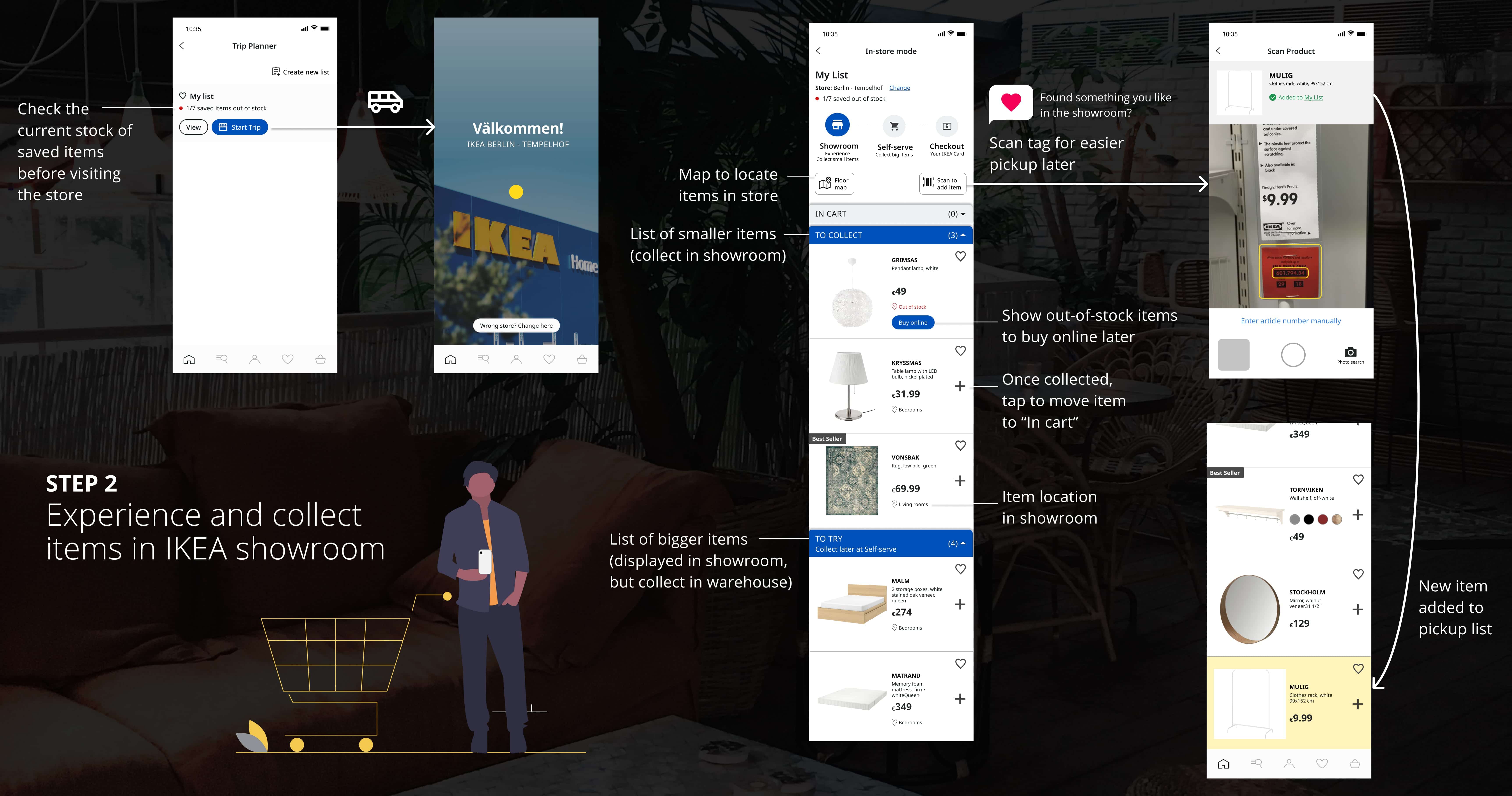
Due to the limited time and resource, I decided to focus on developing 2 features . Although they require more effort, they have the potential to disrupt the way people shop and create new market. Furthermore, the features are also most in line with the problem assigned.
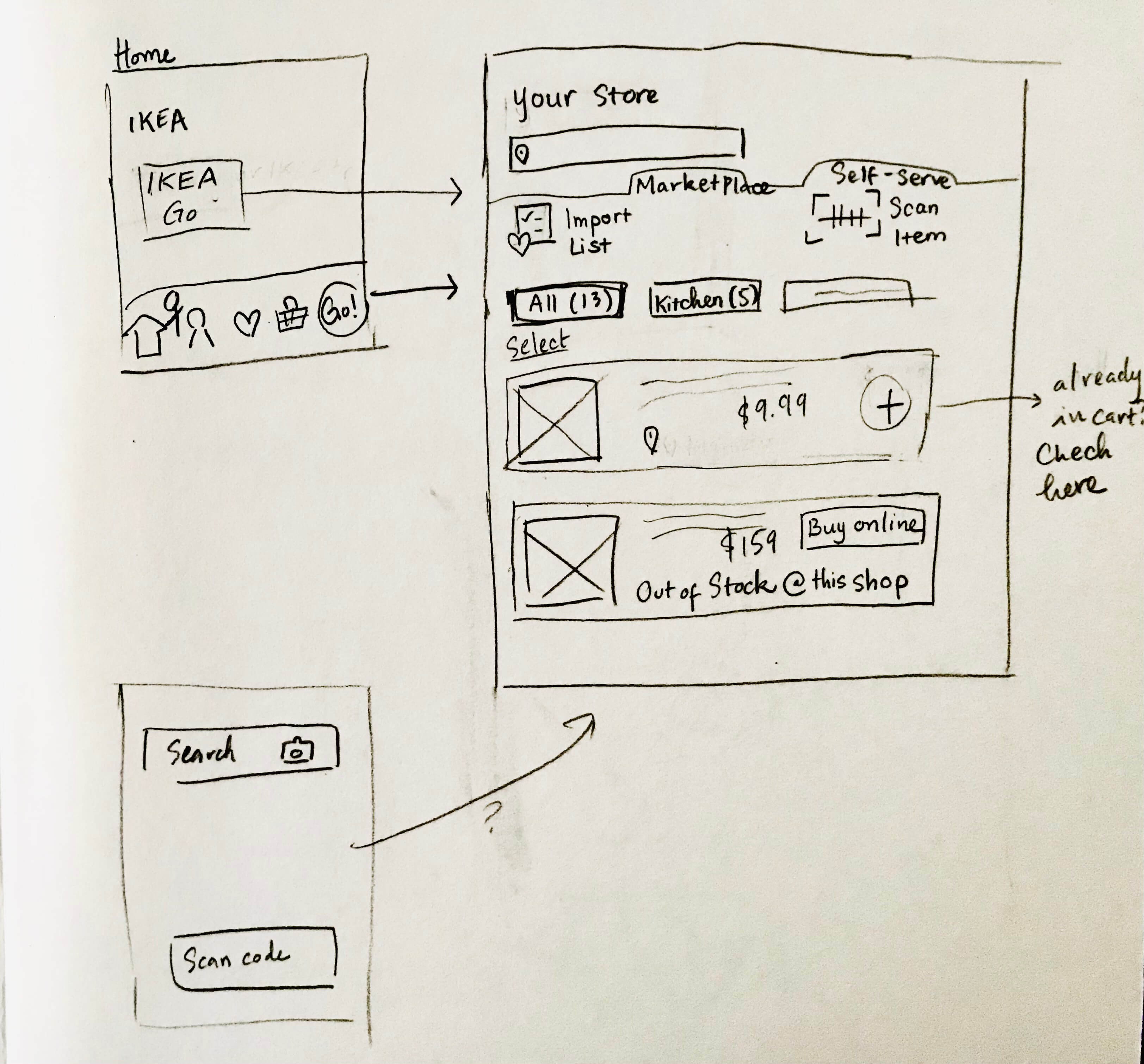
Wireframe sketch for in-store shop assisstant
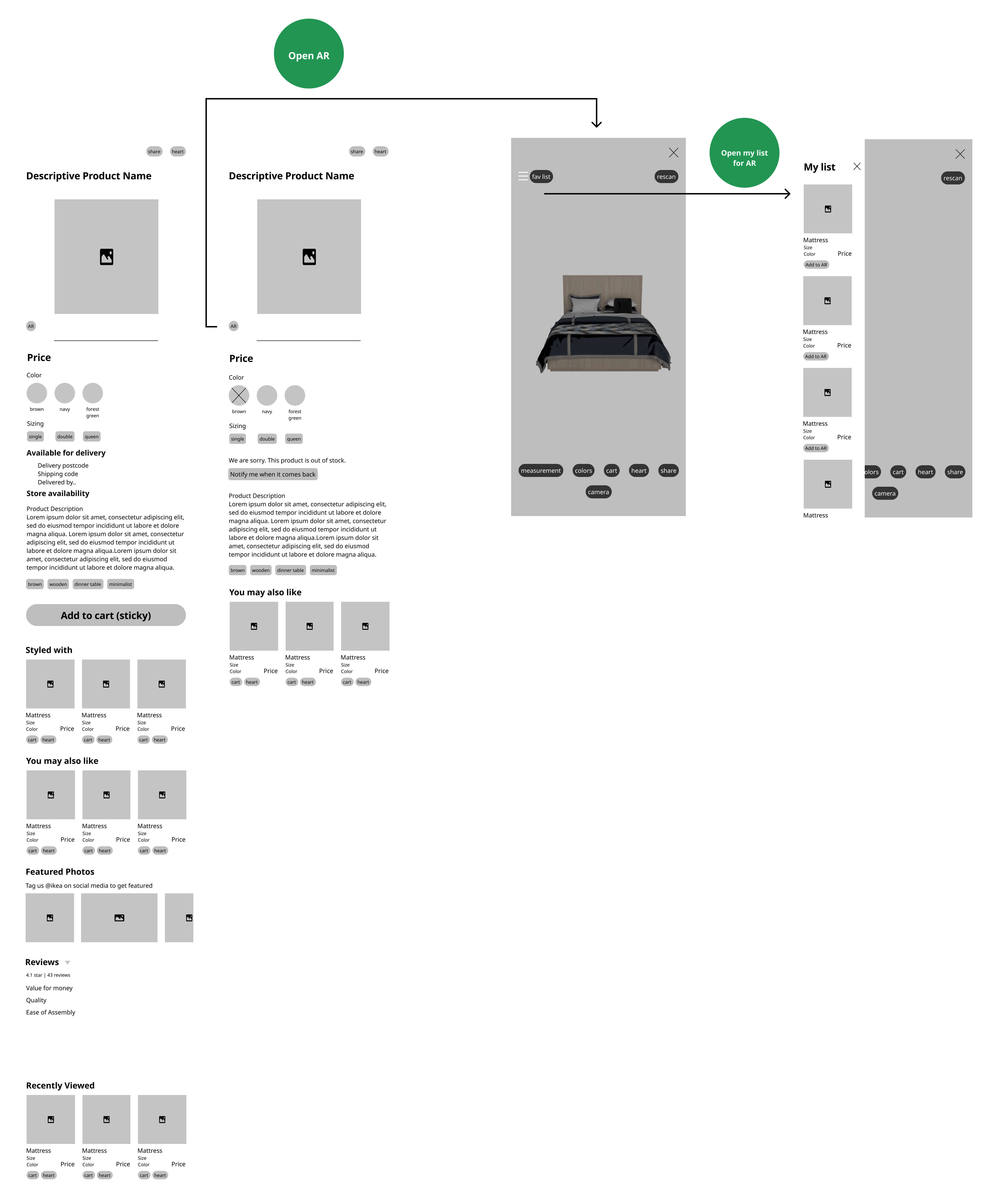
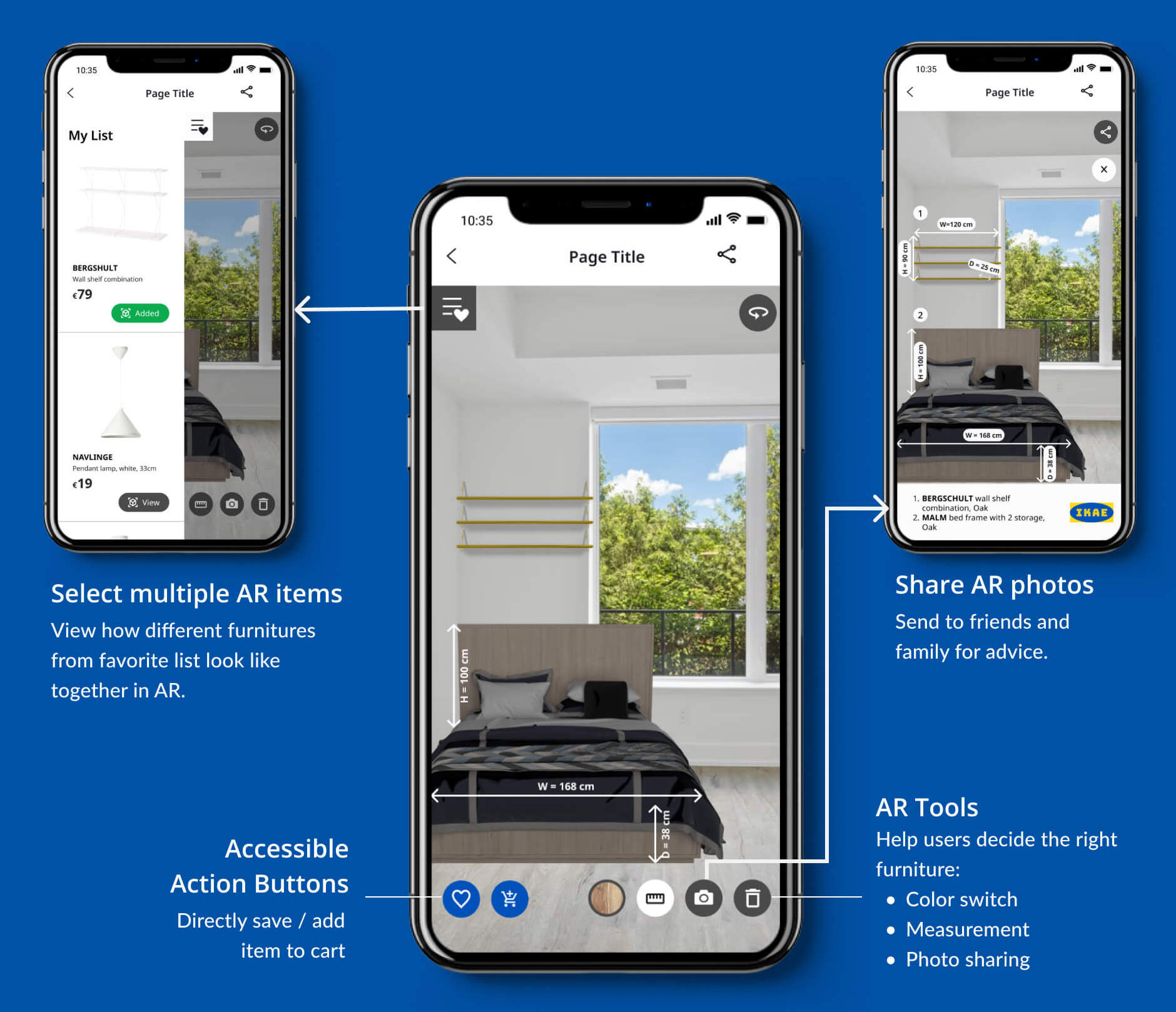
Low-fi wireframe for AR integration
Feature 1
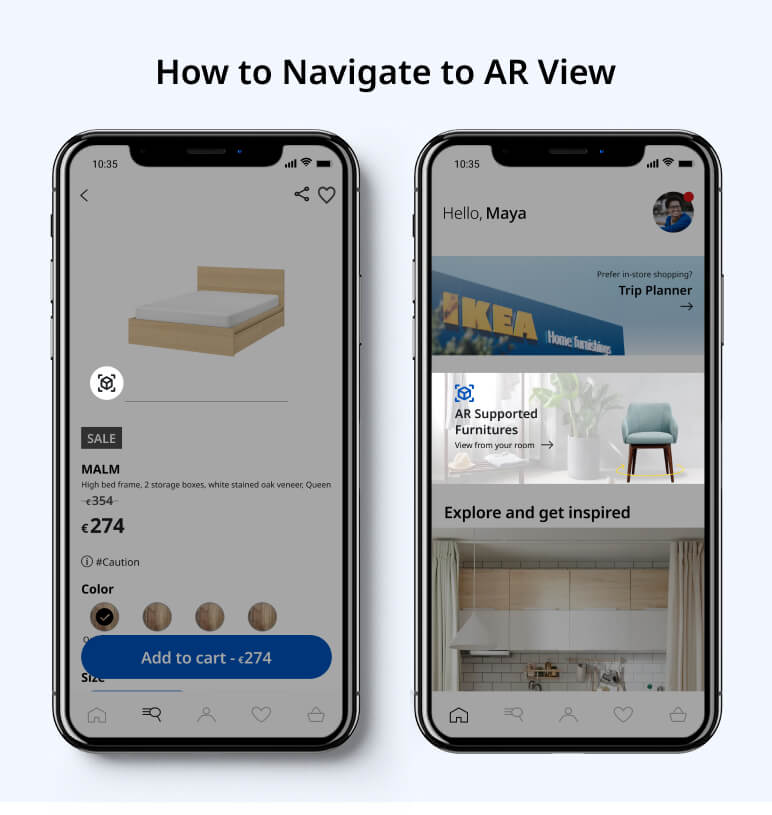
Before: Separate e-commerce and AR apps
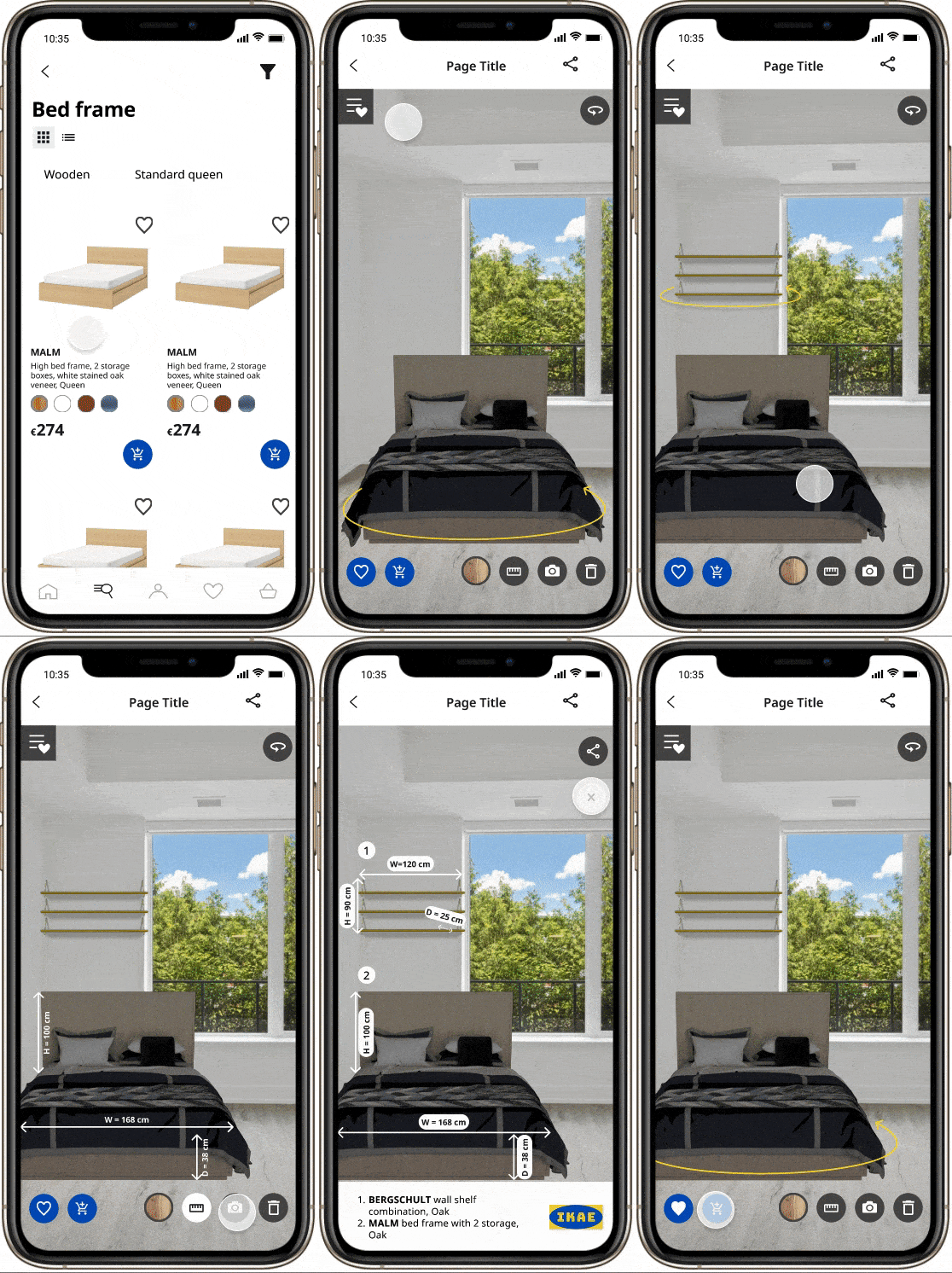
New: AR view accessed from product page, hence directly purchasable
Feature 2